
Table-based rules
Table-based rules check the overall integrity of a dataset — not just individual columns. These rules are automatically created for every table you connect to the DQC Platform and serve as foundational health indicators.
What are table-based rules?
Unlike column-level rules, table-based rules assess the entire table and ensure it:
Has been updated recently
Contains an expected number of rows
Matches the expected schema structure
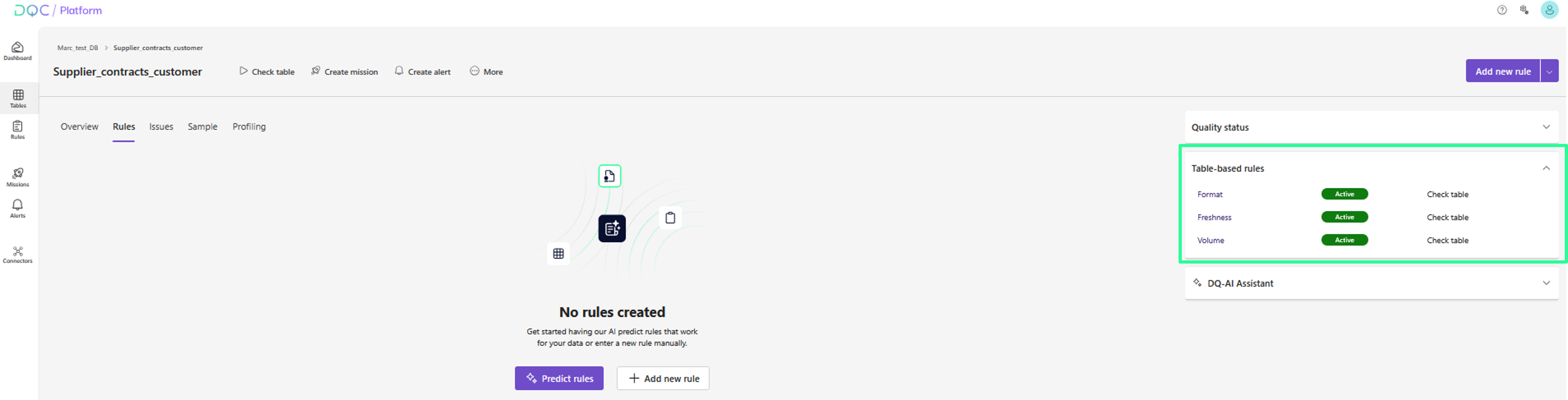 Automatically added rules for freshness, volume, and format
Freshness
This rule checks whether the table is updated within an expected time window — for example, once every 24 hours.
Helps detect pipeline issues or delays
Alerts you if the table hasn't been updated recently
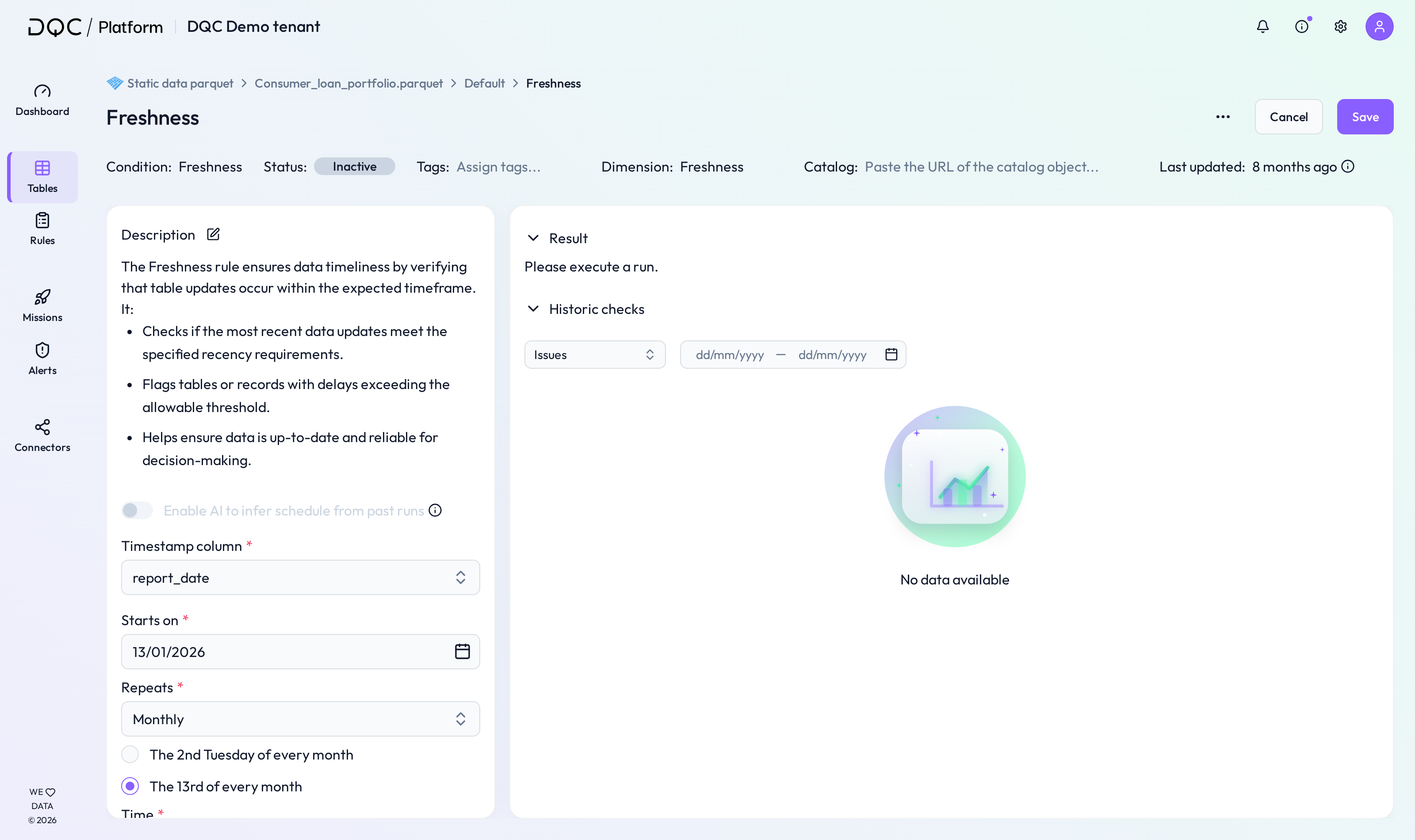 Set expected update frequency and monitor actual lag
Volume
This rule checks that the table has a valid row count.
Alerts if the table is unexpectedly empty or too large
Can help identify failed loads or duplicates
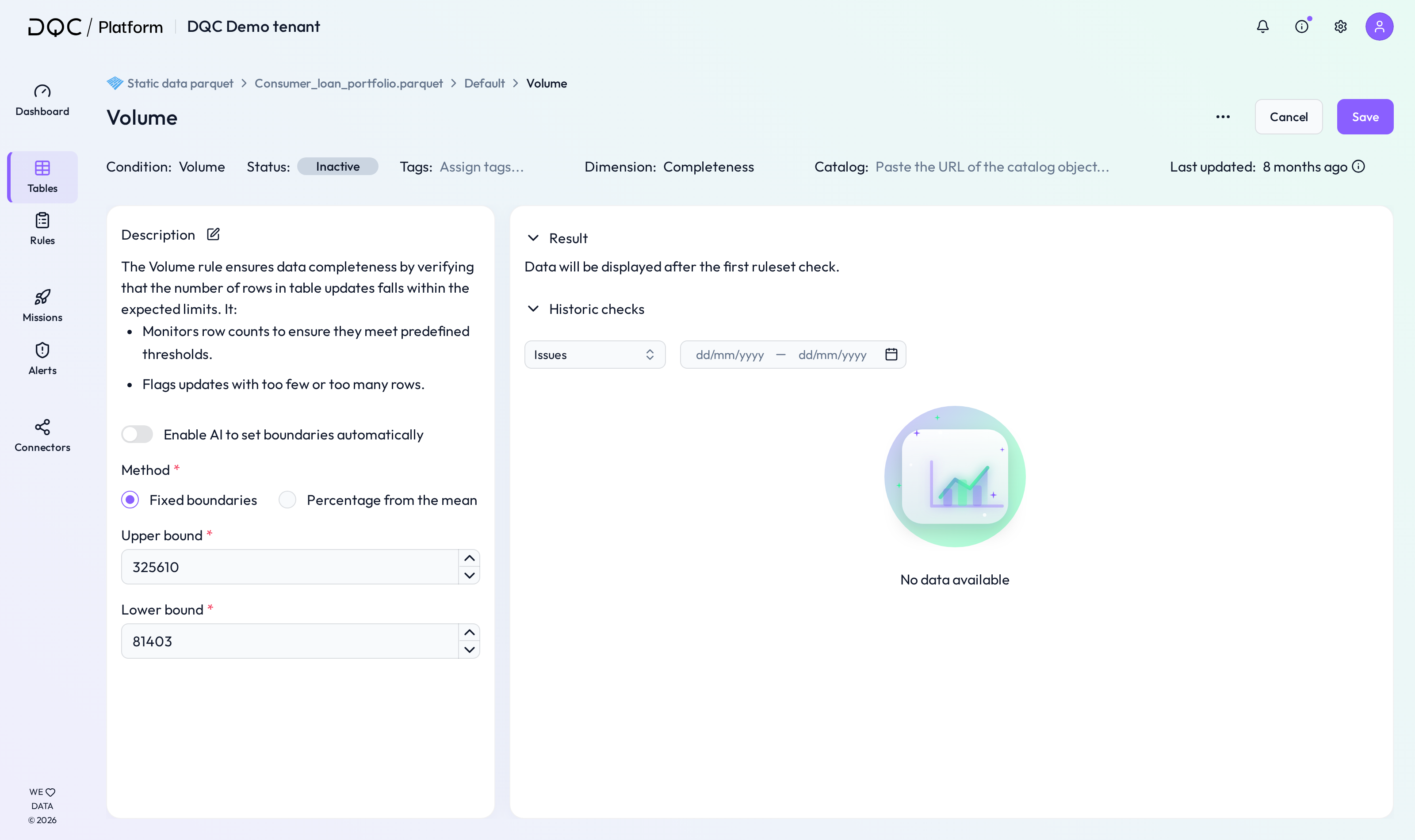 Define a row count range and view trend over time
Format
This rule verifies that the schema structure of the table hasn’t changed unexpectedly.
Compares expected column names, order, and types
Triggers issues if schema drift is detected
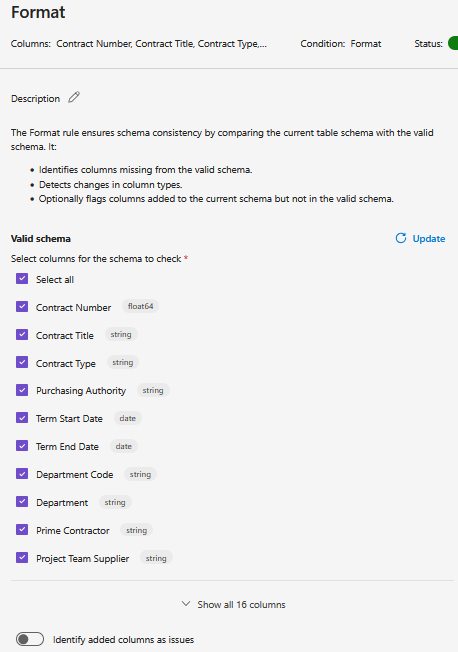 Detects schema drift that may affect downstream logic
 Notes
Notes
Table-based rules are created automatically — no manual setup needed
These rules are always shown in the Rules tab under each table
Learn more: Overview of existing rules, Working with the Rules tab, Rule prediction