
General overview of the DQC Platform
The DQC Platform helps organizations improve and secure data quality across the entire lifecycle — from detection to prevention. This article gives a high-level overview of the platform’s three core pillars.
1. Data quality checks
Automatically or manually create data quality rules tailored to your data tables.
The DQC Platform uses AI to suggest suitable rules and lets you review and activate them. You can:
Generate rules based on profiling insights
Review and customize rule logic
Run checks on your tables and analyze failed rows at the data-point level
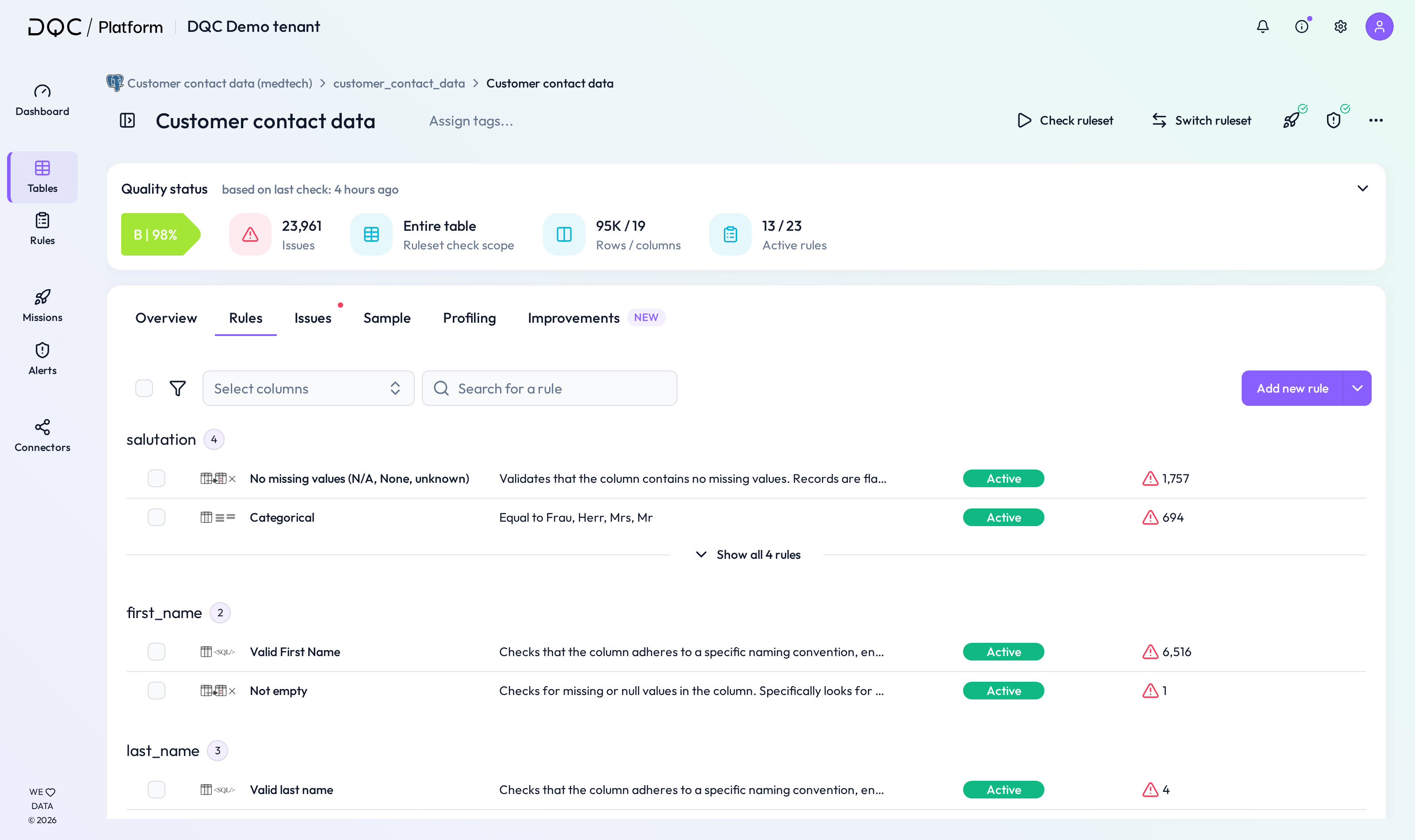 View rule suggestions, apply filters, and inspect individual issues
2. Data improvements
Once issues are detected, the DQC Platform offers several ways to resolve them — either automatically or with help from business experts:
Launch missions that notify users and assign data improvement tasks
Use intelligent nodes like duplicate resolution or address validation
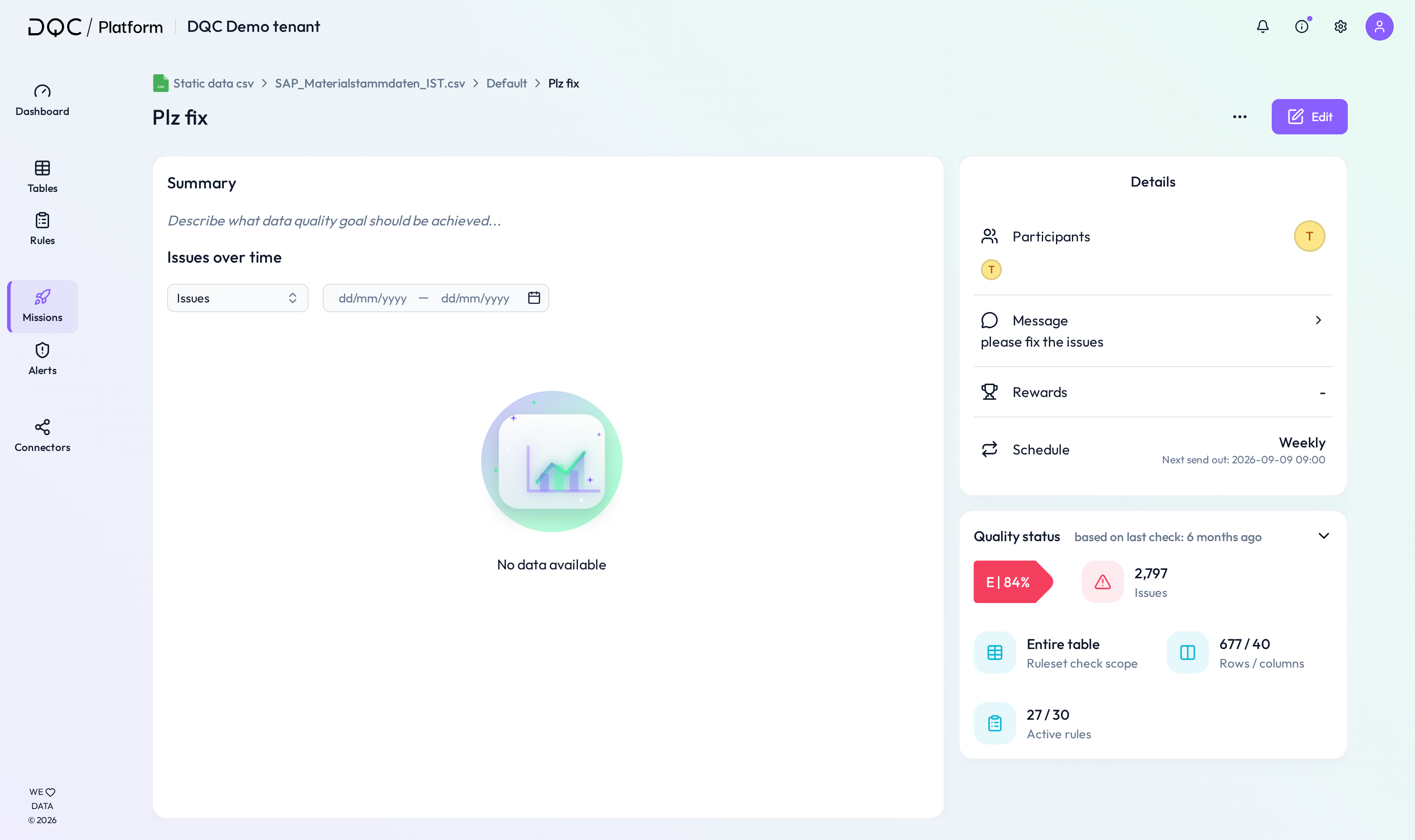 Missions involve business users in solving critical issues
3. Bad data prevention
Prevent incorrect data from entering your systems in the first place.
Apply your data quality rules directly at the source:
Use API endpoints to validate data during creation or import
Integrate rule checks into ETL pipelines as circuit breakers
Connect validations to real-time workflows
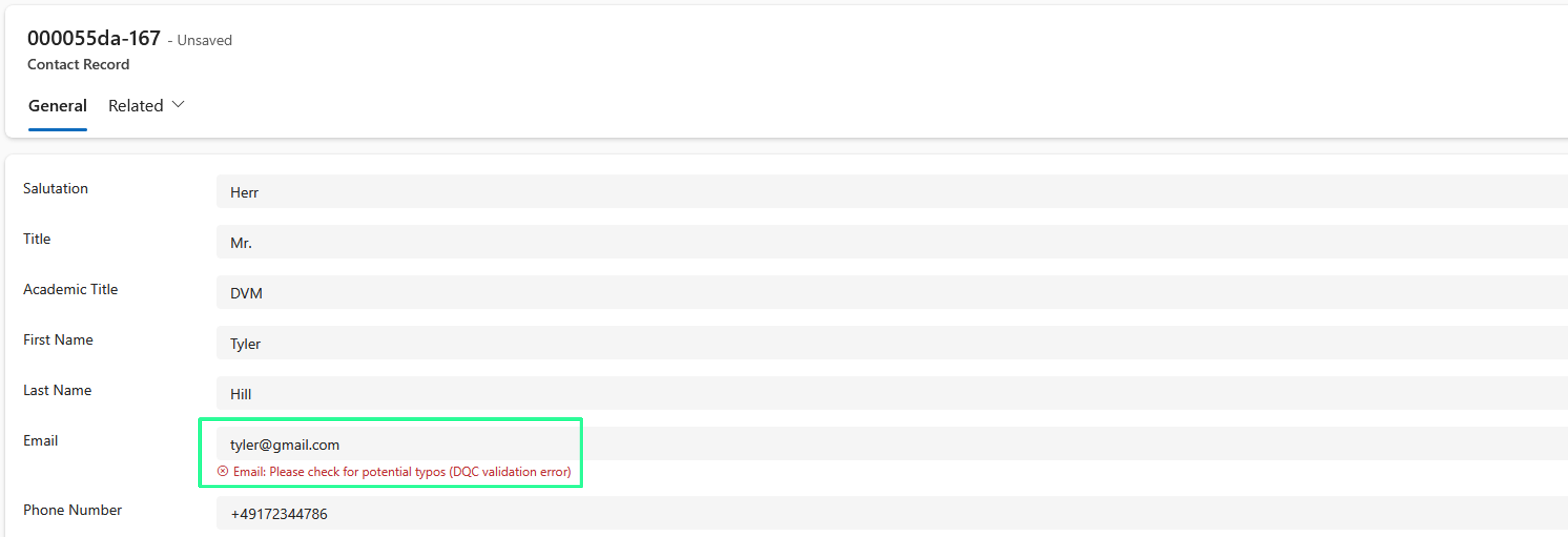 Use validation endpoints to stop invalid data before it’s stored
 Notes
Notes
Each step can be used independently or combined into full workflows
Users can switch between AI-supported and manual rule creation
For details, see Rule creation possibilities, Missions overview, or Validation API